

Technology lock-in…
“We can do this because we have technology to manipulate matter right down to the molecular level. This is an extraordinary ability, think of it! And yet some of us here can accept transforming the entire physical reality of this planet, without doing a single thing to change ourselves, or the way we live. To be twenty-first-century scientists on Mars, in fact, but at the same time living within nineteenth-century social systems, based on seventeenth-century ideologies. It’s absurd, it’s crazy it’s—it’s—“ he seized his head in his hands, tugged at his hair, roared, “It’s unscientific!”
From Red Mars by Kim Stanley Robinson
As I was checking out of my dry cleaners the other day, I asked when they would be moving to a chip-based credit card reader. I was met with a quizzical look.
“We just have swiping,” I was told.
“I thought all businesses needed to be able to accept chip cards,” I said.
“No, we have an old system,” pointing at the card reader with its diminutive keypad, “and it works for us.”

That story isn’t all that different from those I heard while attending ERP developer Acumatica’s annual Summit in Orlando, Florida (Acumatica Summit 2016).

Software from the 20th Century has trapped many organizations with outmoded capabilities and increasing costs of maintaining obsolete systems. Those that can afford to get out, or who can’t but do it anyway, leave a shrinking pool of organizations that become even more entrenched in old technology platforms as innovation continues to pass them by. Those selling and maintain the old platforms must raise their prices to fund maintenance and development while making-up for a shrinking user base.
Serious Insights asserts that technology transitions are, at their core, knowledge management, and collaboration issues. Successful organizations concentrate on education, ownership, and empowerment so can individuals help co-create their future and transform vision into reality. But individuals must also be part of an adaptive learning environment that allows them to obtain the knowledge they need to leverage new software and adapt to new practices. Implementing a large system like ERP that spans the entire organization also requires active collaboration across functional boundaries.
Only by obtaining new knowledge, negotiating through emergent obstacles, and collaborating toward common goals, can an organization break the bindings of old software that threatens to not just keep it from adopting new software, but perhaps keep it from being relevant to its customers and markets.
20th Century apps and practices keep businesses from leveraging modern software
The old software discussed at the Acumatica Summit was not Acumatica’s, which was touted as the epitome of a cloud-based service by customers and partners. Those same customers and partners, however, were frustrated by Acumatica’s vision, because for many of them, the nirvana offered by a fully integrated cloud-based offering wasn’t something they could adopt in its totality.

The problem is that many in Acumatica’s target audience, small and medium businesses, still find themselves shackled by 20th-century practices codified in old software. That combination has stifled their ability to migrate to new platforms, leverage emerging technologies, and innovate their business models.
It isn’t that the old software installed in these organizations is just a general ledger with accounts payable—migrations from those applications are common. But often, these firms have licensed, or developed on their own, very specific software that is, or was, unique to their business or industry. Today, their vertical may have spawned independent software vendors (ISVs), or they may now realize they didn’t need to be as unique as once believed. Regardless of their history, the cost of migrating is often viewed as too high because of the perceived interruptions generated by change, and the investment required to mitigate those interruptions. In other words, they don’t have enough staff to keep the business running and change it at the same time.
In many cases, the legacy software vendors still sell the same software, albeit with new versions, but lacking in a modern architecture, which makes it difficult to offer integration with emerging platforms beyond file transfers. The miracle and malleability sold by the software industry locked in these businesses and the business models of the old school vendors offer little chance for escape.
So for many small and medium businesses, the vision of a highly efficient organization run atop a single software platform that orchestrates all of their business activity remains more science fiction than reality. The vision, and the stories from emerging companies who were quickly able to leverage the new model, make their reality even more frustrating.
A Director of Information Systems from a major education professional association said that while an ERP system might be able to handle most of their business, many intangibles remained to impede the modernization of their software, including long-term employees holding on to established processes, and the fear of many in senior leadership positions of losing relationships and credibility as person-to-person activity became automated. Handling the mundane day-to-day interactions creates a touchpoint that disappears with self-service and automation. It doesn’t help that the vertical side of the business remains locked in a legacy system that doesn’t integrate with the ERP, an application that requires extracts and batch processing for synchronization. Reliance of legacy applications and their supporting processes shore-up arguments made by stalwarts of the status quo. Because of this, people, rather than technology, remain the bridge between information in the various systems.
Holding on to the past keeps the future at bay
The CEO of a pewter manufacturer and retailer said: “We have no money to invest in systems.” They had hardware that was too old to run new software, and software too old to run on modern hardware. Their IT staff person is also the head of human resources and finance. For those who live in the world of small scale manufacturing, existential threats are often as simple as a software supplier no longer offering maintenance. That reality forced them to migrate to a new ERP system. They selected portions of Acumatica’s ERP to run on-premise rather than adopting the cloud because in their rural setting network speeds are unreliable, and Winter storms often disrupt service. Despite the success of a relatively paperless 2015 holiday season, they still coach people every day that it is OK to give up the paper copy of an order.
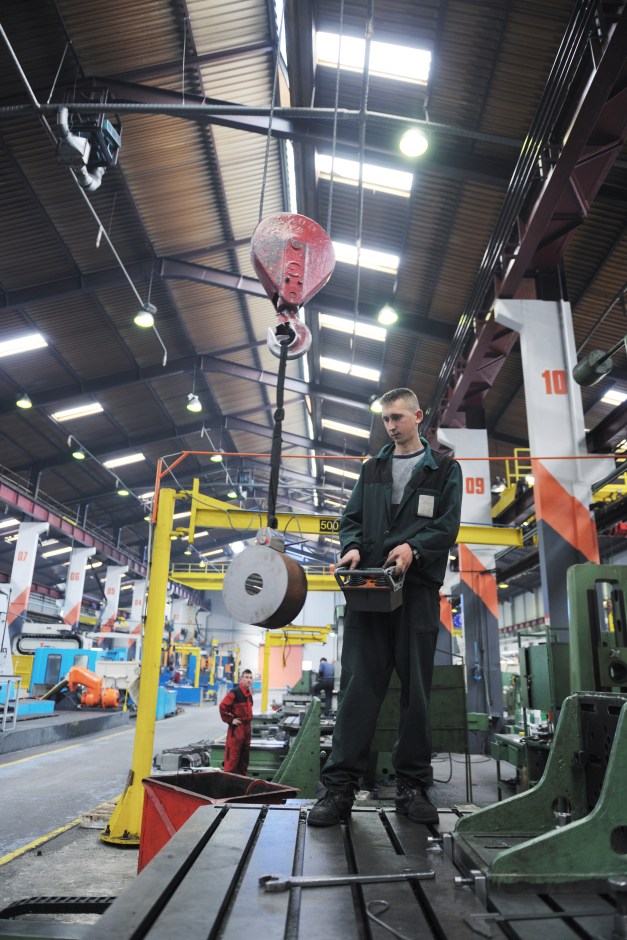
Likewise, the CTO of a New Zealand-based electronics contract manufacturer shared that even after implementation, his company constantly faced employees who worked around the system, breaking the data flows, resulting in inaccurate inventory or jobs lost on the factory floor. “The issue is adoption, not implementation.” The workarounds often mimic old ways of doing things that have been replaced. Their solution to these intentional practice violations focuses on creating context. Management communicates how the actions of each person reverberate throughout the system — affecting it negatively when violating practice, and positively when in compliance. They reiterate the importance of the new system regularly, especially when people skip process steps that aren’t perceived as adding value to their own work.
These are just a few examples of how small and medium-sized businesses still struggle in their journey to the 21st Century. 20th Century software has riveted them to a business model that is no longer optimal. Between processes locked into code and long-term employees holding on tight to old methods, businesses struggle to reorient themselves to a consumer and business-to-business climate where speed and scale increasingly equal relevance.
Solution for shedding 20th-Century technology
So what should small and medium businesses do that want to join the 21st Century and leverage the promise of the cloud?
A compliance advisory organization attending Acumatica’s conference offered a path forward. Rather than thinking about the migration of systems, they took up the charge of reinvention. They decided “to bring the business to the cloud” would be the strategic view that permitted their transformation. That meant embracing mobility, eliminating the “trap” of extracting data into spreadsheets and tapping data at its source, and no longer being satisfied with incremental change.
The organization consisted of nine operating companies, all running as individual entities, with their own business software. Their ERP design consolidated operations and created one legal entity with multiple divisions.
Their CIO shared that they approached their journey to the 21st Century via logic; asking people to make clear choices. “Is it a good business decision to manage nine charts of accounts or just one?” The advice was to break up the strategy into small decisions that people would really have a hard time arguing with. They also involved everyone who would be affected by the new system early, bringing them in as requirements were gathered, and systems evaluated. They have been systematic about communication. Not content to simply duplicate existing workflows, they evolved internal processes to leverage the capabilities they acquired with Acumatica. One example of this was the use of the ERP case system to manage and resolve not just customer issues, but issues related to software and processes issues.
Not all small or medium-sized businesses can make the leap from a system, a process, or a business model that is good enough for what they do. Perhaps they don’t want to grow, and being a viable business over the long-term isn’t a concern. When the owner retires, the business may retire too. But for thousands of small and medium businesses, the promise of software to keep them competitive has faltered. Investments in state-of-the-art systems running on PCs and local servers have constrained them from competing effectively with start-ups, offering the same goods and services, who are simply able to adopt new models. The legacy systems designed in-house were often purposefully built to codify existing processes, leading to arthritic processes no longer able to flex.
Avoiding future technology lock-in
It is easy to say that the business software community needs to address these issues. In some cases, though, the legacy suppliers have themselves decided not to, or can’t afford to, upgrade to modern architectures that deliver good cloud and mobile experiences, along with APIs and SDKs that permit them to play nicely with their more modern cousins. They are facing their own existential threat from programming models and platforms that wag a much longer tail than software advocates of the past could imagine. With the rapid development of software, who would have thought that old software would one day become an impediment to change.

Larger developers, who can afford to dislodge themselves from the past, choose often to maintain backward compatibility, motivated by the need for legacy software to remain functional, at the same time limiting their ability to lead the next generation of development. Microsoft and Oracle, Cisco and IBM, haven’t done enough to help bring smaller ISVs along, on one hand creating safe compatible cushions that lull legacy firms into complacency, and on the other hand, choosing to highlight and invest in firms that meet their latest incremental platform push, further marginalizing those who can’t keep up, allowing them to persist in the shadows until maintenance is no longer offered.
Change is going to continue and today’s software platforms are just as vulnerable to eventual displacement by innovation as those of the past. It is incumbent upon technology developers to rapidly, but not recklessly, adopt and migrate to new technologies as they arise.
Large software platform makers need to consider abandoning their legacy platforms more quickly, but that isn’t enough. They also need to create programs that bring their ecosystems along with them, including those focused on small and medium businesses. Perhaps the most important item to avoid technology lock-in is the openness of data and transparency of process to best safeguard against technology obsolescence. Most data can be easily migrated between systems because it can be extracted and loaded into new systems via standard tools. Process is often more complicated, especially if it has been embedded directly into modifications in the code. As much as possible, organizations should acquire software that permits high-level configuration of process components that don’t require modifications to the underlying code. If buyers still need customized software, they should work with partners and the primary software supplier to design modifications that minimize the impact on the core code, while abstracting their custom requirements as much as possible in order to make them more portable in the future.
Software evaluations should include future-proofing, both through architecture and market commitment, as a key criterion. Negotiating for the future is always better at acquisition than when a crisis of compatibility occurs.
One thing not to do is under-invest in transition, or take the cheap way out. If money is an issue, prioritize key functions first, even though the bright shiny objects of new capabilities may be appealing. If a new community site works but primary e-commerce capabilities fail, then the investment priority was probably flipped.
It is crucial that businesses continue to transition to the latest software in order to be first-class participants in the digital economy. Not only do small and medium businesses need to plan better for the eventual obsolescence of past software purchases—the software suppliers also need to plan for how to keep their customers current. With an ever-accelerating pace of change, those companies who still cling to 20th Century software will find it increasingly difficult to compete.
Enjoyed exploring technology lock-in:? For more Serious Insights on strategy click here.
Leave a Reply